 Pin-up Art
Preview image — download the full-resolution TIF after purchase
Basic Information
Historical Context
Created during Vargas's tenure with the Ziegfeld Follies and his early commercial work for Harper's Bazaar, this piece captures the essence of the flapper era that defined American culture in the 1920s. The period between 1924 and 1926 represented the height of Vargas's early style, before the Great Depression would transform American illustration. Working closely with Broadway's most beautiful performers, Vargas developed his intimate understanding of female beauty and fashion during these years. The hand mirror motif was a recurring theme in his early work, allowing him to explore reflections, vanity, and the theatrical self-awareness of the modern woman. These watercolors were often displayed in the lobbies of Ziegfeld productions or reproduced in high-society magazines.
Artistic Appreciation
This early work reveals the foundations of Vargas's mature style while remaining distinctively rooted in 1920s aesthetic sensibilities. The elongated proportions and elegant hand gestures show the influence of Art Deco illustration and the theatrical portraiture tradition. Unlike the airbrushed perfection of his later Esquire work, this watercolor retains visible brushstrokes and pencil lines that give it an intimate, sketch-like quality. The composition's use of the mirror creates a subtle doubling effect, inviting the viewer to consider both the subject's self-image and the artist's gaze. The restrained color palette and emphasis on line over tonal modeling distinguish this early period as a moment when Vargas was still negotiating between fine art traditions and commercial illustration demands.
Portrait of a Flapper
Visual Description
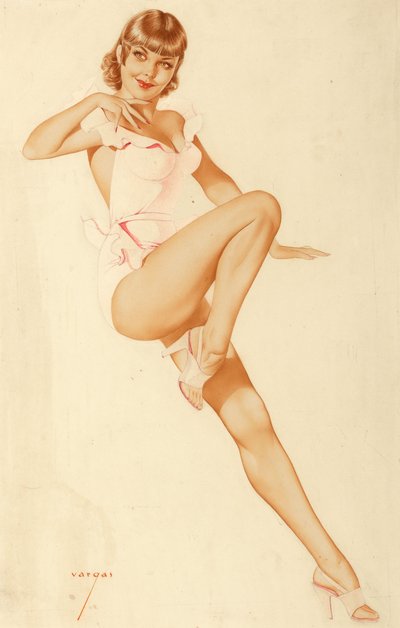
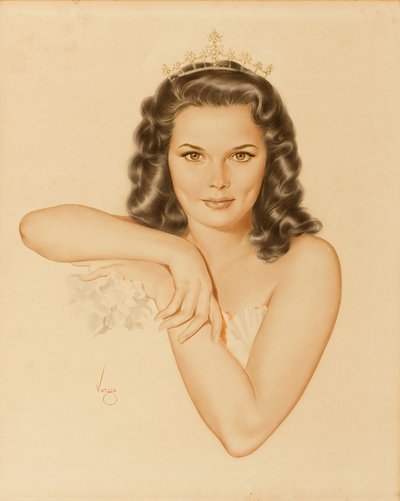
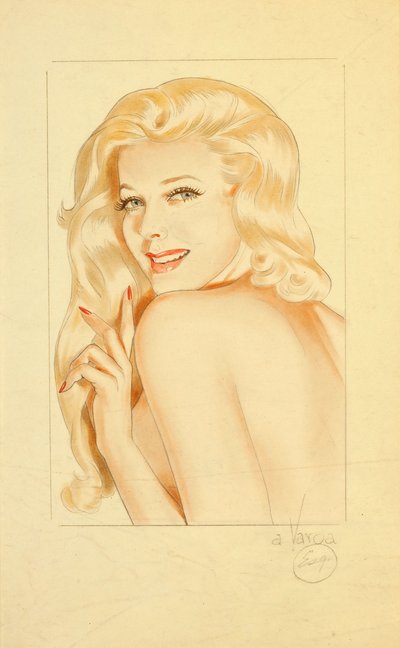
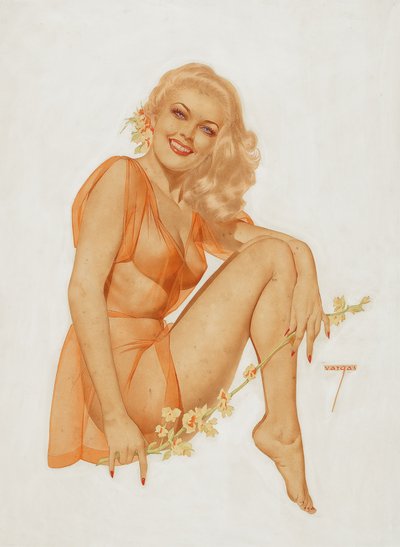
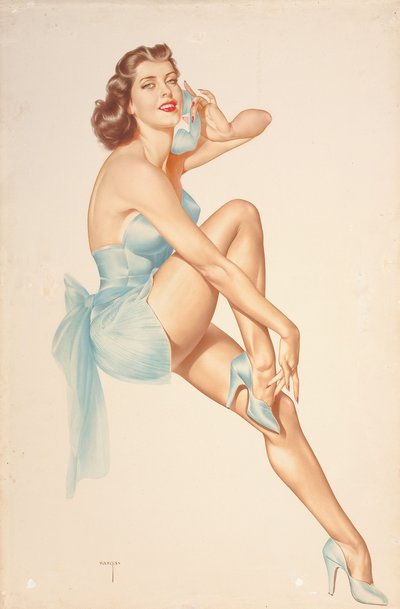
The subject is a quintessential 1920s flapper, with bobbed or marcel-waved hair, kohl-rimmed eyes, and the boyish silhouette that defined Jazz Age fashion. She holds an elegant hand mirror, possibly silver-backed with Art Deco engraving, and studies her own reflection with a mixture of confidence and coquetry. Her attire likely features the dropped waist, beaded fringe, and plunging neckline characteristic of the era. Vargas's watercolor technique produces delicate, transparent layers of color that suggest rather than define the forms. The palette is restrained—soft peaches, muted roses, and ivory whites—allowing the precise pencil linework to remain visible and dominant.
Specifications
Order a Print
museum-quality prints of this artwork, shipped to your door
Subscribers save 30% on all prints
Free standard shipping (5-10 business days) · Ships from US
Instant download after payment — $1.99 per artwork
Re-download anytime from your account — no expiration
Commercial license included in every purchase
Or subscribe for $9.99/month — unlimited downloads
Community
Customer Reviews
Leave a Review
Loading comments...